10 April 2015

Exploring West Africa: Ouidah and Ganvié, Benin (Part 4)

Exploring West Africa with Silversea's Silver Explorer, starting in Accra, Ghana on 10 April 2013 and ending in Dakkar, Senegal on 26 April 2013.

April 13th, 2013

Population of Benin (2013 estimate): 
10.32 million

Population of Porto-Novo, the capital city (2009 census): 267,000

Currency: 620 (XOF franc) ~ US$1

Demonym (people from Benin are called): Beninese

GDP per capita (2012 estimate) = 
US$ 794 (in Kuwait it’s $45,824)

HDI (2013): 0.476, 
i.e. 165th in the rank of all countries


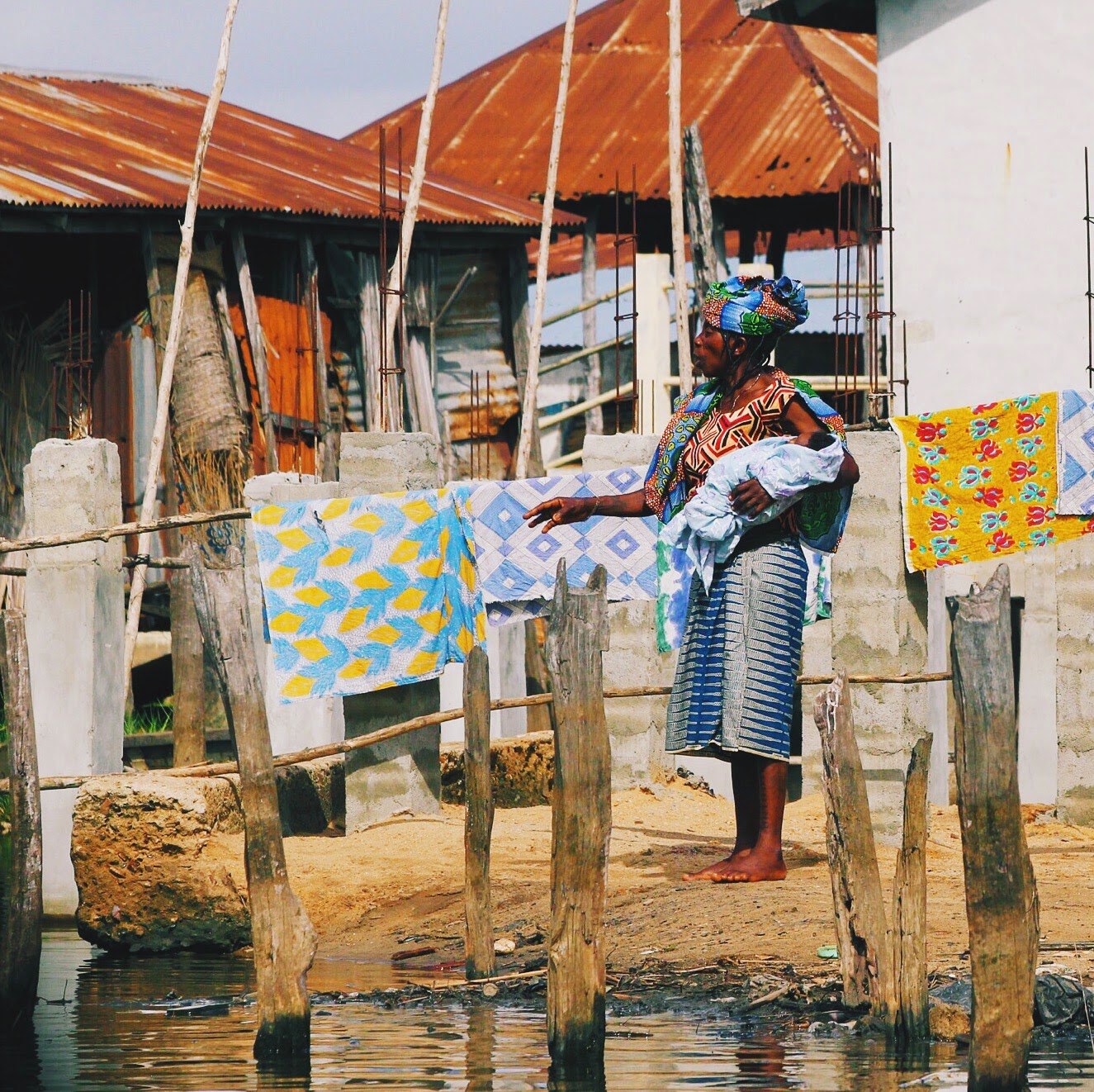
Ganvie is a lake village in Benin that is not far off from Cotonou, the largest city in the country. Ganvie has a population of 20,000 which is pretty impressive for a village built on a lake! Why would people choose to live on a lake when they come from a continent as big as Africa? A slave trading tribe, Dahomey, had a religious ban on their warriors to enter the water, making the islands in the lagoon a safe territory for other tribes.


Before getting on little boats that would take us to explore this fascinating lake village, we saw the fishermen along the shore selling their catch. We were told people here on the shore didn’t like to have their picture taken, but once we got into the lake village, everybody was readily smiling for and welcoming us to take pictures.


Imagine living on a lake. There are people who choose to live in boats by the shore, or on ships that travel throughout the year, but to have your house on a lake must be something else. I wonder how kids go to school, how early would they need to learn to swim, how would they play hide and seek, and do they keep any pets? Kids today who live in modern societies take so many things for granted. I think many of them would grow up to be much more responsible adults if given the opportunity from an early age to be exposed to how other children around the world live their lives. 


This kid asked to have his picture taken :-)


One scene that struck me as a bit odd in Benin was seeing all these new mosques built in the middle of some very poor villages. They look like the typic mosque that you’d find in any of the blocks we see here in wealthy Kuwait. Mushrooms of donations from wealthy Gulf states popping in West Africa. I only wish housing, healthcare, and education were given as much attention by these generous oil-rich donors instead of advancing their own agendas, namely, religious conversions. 

Look at this piece of elaborate construction of Islamic Art in the middle of these above-water shacks.
About 17% of the population of Benin, some 1.6 million people, follow Vodun. This does not count other traditional religions in Benin. In addition, many of the 41.5% of the population that refer to themselves as Christian practice a syncretized religion, not dissimilar from Haitian Vodou or Brazilian Candomblé; indeed, many of them are descended from freed Brazilian slaves who settled on the coast near Ouidah.
Ouidah is a city on the Atlantic coast of Benin that is known for having a dark history of slave-trading. The Portuguese, English, Dutch and French all constructed forts in the city to protect their interests in slaving, and for more than 200 years, the main commodity they traded was people. The Portuguese first reached the town in 1580.
The Gateway of No Return is an arched monument that was constructed for the memory of all those slaves who left the beautiful coast of Benin and never returned. 

“Slave traders rounded up men, women and children, at times trapping them with nets. Their catchment area stretched deep into Africa, even as far as Ethiopia and Sudan. Once caught the slaves were forced to walk in chains, hundreds of miles to Ouidah. Once there, they were subjected to a brutal process of brainwashing. 
Taken down the slave route they were made to walk around a supposedly magical tree called the Tree of Forgetfulness. Men had to go round it nine times, women and children seven. This experience, they were told, would make them forget everything - their names, their family, and the life they had once had.
As if this was not enough, the slaves were then locked into a dark room, built to resemble the hulk of a ship. In the local language this room was called Zomai, meaning literally: "There, where the light is not allowed.” Its foundations are still visible and the place still seems to exude evil spirits and terror.
After several weeks - or even months - in this hell hole, the slaves were packed in ships for the long crossing to the Americas.” (1)

It was a hot and humid day when we walked on the path that led to the arch. It was hard for me to imagine that chained humans were dragged on this same path, away from their families, into forced labor, and that this happened for more than 200 years. 

Tour guide taking us down the path to the arch

So we boarded the ship, and had one full day at sea sailing 284 nautical miles towards Takoradi, Ghana!

Here are a few more pictures from Benin…

Friday sermon on a boat

Washing fishnets

What to cook for dinner?

You think my laundry’s ready?

Around the neighborhood where the Gateway of No Return is

Closer to the capital


We even saw people running for a marathon!

 Green light but nowhere to go


1. Branford, Sue. "Benin's Dark Past of Slavery." BBC News. BBC, 07 Sept. 2006. Web. 18 Mar. 2015.


19 July 2014

Exploring West Africa: Togo & Benin (Part 3)

Exploring West Africa with Silversea's Silver Explorer, starting in Accra, Ghana on 10 April 2013 and ending in Dakkar, Senegal on 26 April 2013.

West African Vodun (Voodoo)

April 12th, 2013


Dance is not very commonly integrated into our Abrahamic religions (Judaism, Christianity, and Islam), but it is widespread among the older religious traditions. It is used as a means to symbolically represent the supernatural world and to tell the stories of the spirits. Dance is usually performed to the rhythm of various musical instruments, and dancers often wear special costumes and masks according to the kind of performance presented. Especially in societies that lack systems of writing, dance becomes a way of telling sacred stories and tales. Specific movements and masks are used to portray different spiritual characters.1
A spirit embodied! (Ganvié, Benin, 2013)

Dancing to the rhythm of drums. We were instructed not to touch the dancing spirits, or else!
(Ganvié, Benin, 2013)

I wonder what these specific spirits are supposed to represent..? (Ganvié, Benin, 2013)

The West African Vodun (or Voodoo) is a word that means spirit. The cosmology of the religion centers around the spirits and other elements of divine essence that govern the Earth. A common misconception is that in West African Vodun spells are cast upon individuals. Whereas the religion really emphasizes on the cult of the ancestors and spirits. Vodun spirits are hierarchal in nature, and form the center of religious life. Adherents of Vodun emphasize ancestor worship and believe that the spirits of the dead live side by side with the world of the living, sort of like how like in Islam the djin is believed to live among people, or in Christianity, where angels are believed to be among us. 

The high priest (on the left) and his family
(Togo, 2013)

Vodun is organized around a creator/creatress deity, Mawu and Lisa. Mawu and Lisa (Goddess and God) to the Ewe is the Supreme Being, who in one tradition bore seven children and gave each rule over a realm of nature - animals, earth, and sea - or else these children are inter-ethnic and related to natural phenomena or to historical or mythical individuals. However, even if the origin of humanity and the world are explained in Vodun mythology, it is not a centered question of the faith. The followers believe that the answer to such question is beyond human reach. Priority is given to the ancestors with them interceding on behalf of their families and descendant towards the Almighty.


The first dance (Togo, 2013)

Future priest and priestess (Togo, 2013)


Vodun priests receive a calling from an oracle, which may come at any moment during their lives. They will then join their clan's convent to pursue spiritual instruction. It is also an oracle that will designate the future high priest and high priestess among the new recruits, establishing an order of succession within the convent.

Blessing the Earth

In Togo, about half the population practices indigenous religions, of which Vodun is by far the largest, with some 2.5 million followers; there may be another million Vodunists among the Ewe of Ghana, as a 13% of the total Ghana population of 20 million are Ewe and 38% of Ghanaians practice traditional religion.
Here are a few pictures from the Vodun ceremony in Togo.


The women were helping this man wash his face for some reason (maybe to cleanse from a bad spirit?) The baby looks unconcerned. 

A spirit seems to be just entering the body of this woman. Notice her face is not painted yet.

The possessed man and woman (with painted white faces) are dancing to heavy drum beats.

As strange as this whole ceremony seems, I understand when someone has a need to just let go. The daily life of these villagers can't be easy. Weekly ceremonies spent among family and friends dancing and chanting is a good way to forget worries for a change, and just relax.

This little boy and I were observing the event from the comfort of our corner.

Under the African sun...
Here are some snacks for after the ceremony...

See you tomorrow in Cotonou, Benin! Au revoir!

1. Stein, Rebecca L., and Philip L. Stain. The Anthropology of Religion, Magic, and Witchcraft. Third ed. Upper Saddle River, NJ: Prentice Hall, 2011. Print.

30 May 2014

Exploring West Africa: Lomé, Togo (Part 2)

Exploring West Africa with Silversea's Silver Explorer, starting in Accra, Ghana on 10 April 2013 and ending in Dakkar, Senegal on 26 April 2013.


April 12th, 2013


Population of Togo (2013 estimate): 7.15 million
Population of Lomé, the capital city (2010 census): (837,437)
Currency: 485 (CFA franc) ~ US$1
Demonym (people from Togo are called): Togolese 
GDP per capita (2012 estimate) = US$ 584 (in Kuwait it’s $45,824)
HDI (2010): 0.459, i.e. 159th 

As soon as we docked in Lomé we got into a tour bus. We had police escorts in front of the bus as well as in the back of the bus. Without their help it would’ve been impossible for us to get to Kpalimé (121km away) and back within the same day.

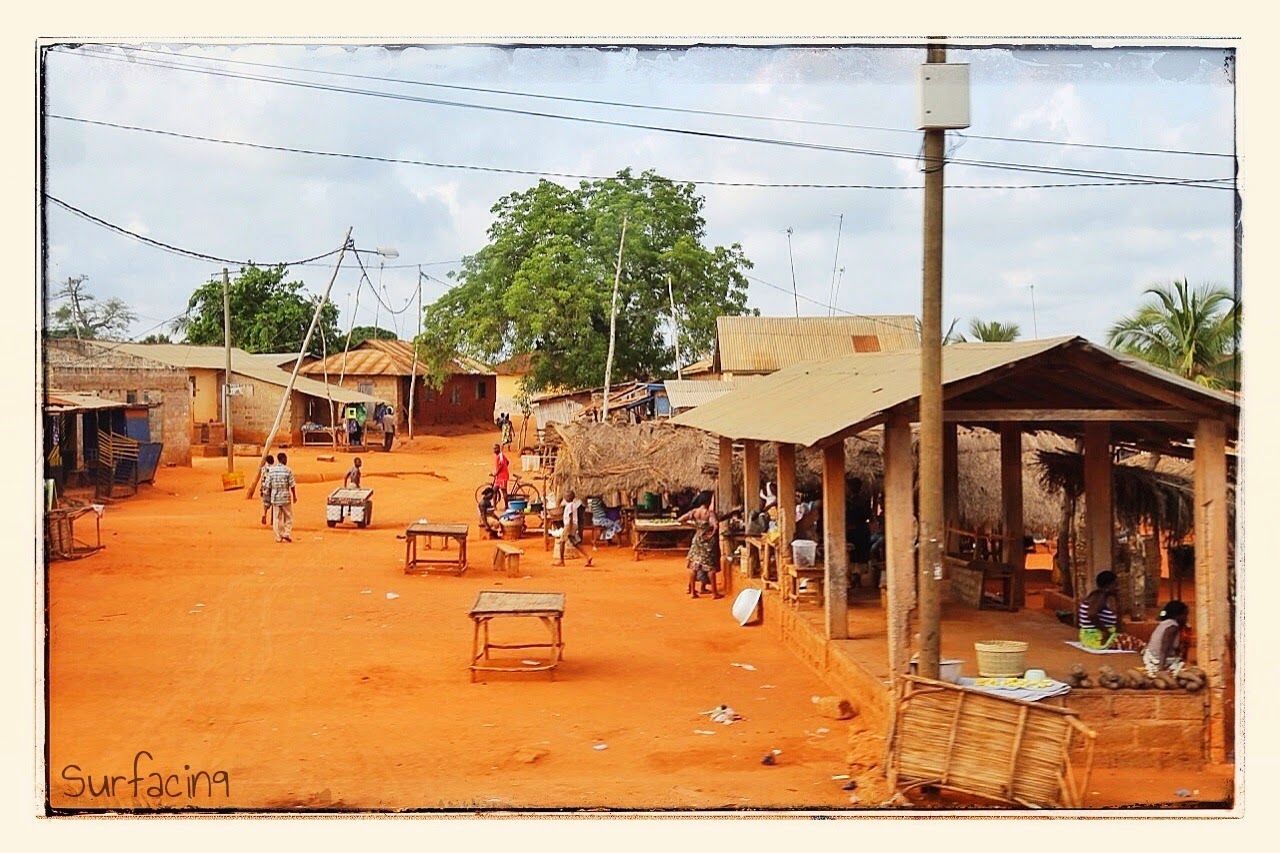
The asphalt road we drove on branched into colorful dirt roads. People traded all kinds of things by the sides of the roads. All text was written in french. Togo gained its independence from France in 1960. Everyone was on motorbike. Drivers wearing yellow shirts were taxi bikes. You could hop on the back seat and enjoy the fresh air to your destination. 


On our way to Kpalimé we stopped at a bush school, which was in a traditional Ewa village. We received a very warm welcome from the locals. Song and dance, football and cheers, women and children, all dressed up for the occasion. 

A welcome song performed by women of this Ewa village 

The students at the bush school were amazing. If somehow we could get the the world to care more about children’s education I believe we’d be able to erase poverty within a single generation.

A school teacher with his students

One of the classrooms in the village

This is what a typical classroom looks like in a West African village


The Ewe are an ethnic group located in Togo. The Ewe are a patrilinear people; the founder of a community was the established chief, and was then usually succeeded by his paternal relatives. In modern times, chiefs are generally elected by consensus and get advice from elders. There are a number of guidelines regarding the behavior of chiefs. They are expected to keep their heads covered in public, and are not to be seen drinking. The people see the chief as the communicator between the every day world and the world of the ancestors. The chief must always keep a clear mind.

The village chief


The Ewe have an intricate collection of dances, which vary between geographical regions and other factors.
One such dance is the Adevu. This is a professional dance that celebrates the hunter. They are meant both to make animals easier to hunt and to give animals a ritual 'funeral' in order to prevent the animal's spirit from returning and harming the hunter.
There are also war dances, peace dances, dances for art and display, dances to invite ancestors to sacred occasions into a shrine.
A dance performance by Ewe women 


Before we got back to our ship, we attended a Voodoo ceremony.. The next post will be devoted to Voodoo!

04 November 2013

Exploring West Africa: Accra, Ghana (Part 1)

Exploring West Africa with Silversea’s Silver Explorer, starting in Accra, Ghana on 10 April 2013 and ending in Dakkar, Senegal on 26 April 2013.

April 9 – 11th, 2013


Population of Ghana (2010): 24.2 million
Population of Accra, the capital city (2012): 2,300,000
Currency: 2 GHS (Ghana Cedis)  = US$1
Demonym (people from Ghana are called): Ghanaian 
GDP per capita (2013) = US$ 1,670 (in Kuwait it’s US$ 45,824)
HDI (2013): 0.558, i.e. 135th 

Accra is like this massive party happening all on its own regardless of what’s going on around the world. Just bring yourself and you’ll be a part of it. Hot and sticky, colorful and loud, you will not get a chance to be alone, not even in your head. Reminds me a little bit of India, although not as humble. Accrans are friendly, warm, and welcoming, but what I really like about them is that they’re bold, upfront, and inquisitive. In a bustling marketplace, as my husband and I walked in a single file behind the tour guide, a woman from the crowd got my attention. Putting on an authoritative face she yelled, “Hey! Heeey! Where’s yo’ yello-feeeva?!” I kept on walking with the river of bodies that carried us deeper and deeper into bargaining and trade, but reluctantly turned my head to see the demanding woman’s face. I spotted her way back, she smiled with a wink. I smiled back, acknowledging that she was just poking fun at us tourists. 


This market had stalls specializing in everything imaginable. There was a vendor for belts, another one sold jeans. One for electric fans, another for remote controls. There was one for laundry baskets and hangers, and another for tape. Yes tape! Different shapes and sizes! I bought a few meters of Kente cloth. I was supposed to bargain, but I hate playing that game, and I thought the price was reasonable, so I bought it without arguments. Turned out the exchange rate I calculated in my head was off by an entire decimal, and I ended up paying for it way more than I thought. Lesson learned. Always bargain. And using a currency calculator App won’t hurt either.

The roll of Kente cloth I purchased. What do I do with it?

Woman selling tape
Woman selling jeans


We visited what they call a compound, which is basically a community that lives together sharing water sources, electricity and such. This tour, as well as the earlier tour we took in the city were arranged by Easy Track Ghana. Their office is based in the compounds of Kisseman. Jessie, our tour guide, took us to their office where we met with Steve. They explained the activities of the community and took us around to see how people live. It was an unforgettable experience.  
The office of Easy Track Ghana
Jessie and his son


The butcher
Car repair shop


The hair saloon

Woman frying fish

Vegetable market

If you’re thinking of going to Ghana, Easy Track provides a good list of items that are much appreciated as charitable donations.


Jessie invited us to his home, where we met with his wife and son.

At the entrance to Jessie's home
Jessie's wife prepared us lunch.
We ate while watching Ghanaian TV drama ;-)


Adding flavour to the dish!
I smell something cooking...


We also saw the gym..


I left Accra all pumped up about the rest of our West Africa trip. People in this part of the world know how to have a good time and I was ecstatic about spending the rest of my vacation days getting to know the history and culture.

Back in the city


And so we se sail aboard Silver Explorer on the evening of April 11th 2013.